NCCJPA’s Total Systems Planning:
Late Postwar Architectural Research toward a cybernetic model of carceral design
Abstract:
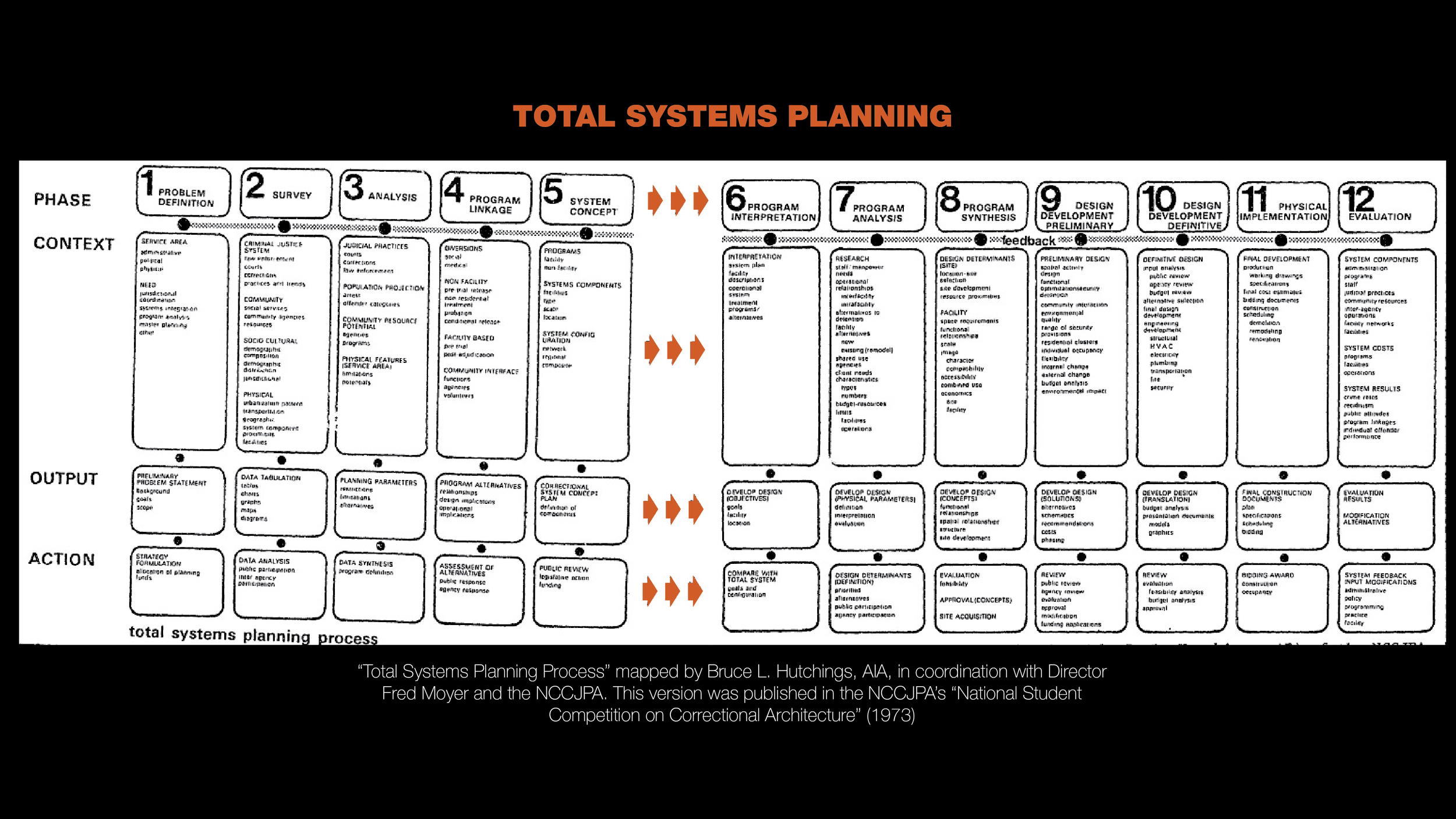
This research positions the National Clearinghouse for Criminal Justice Planning and Architecture (NCCJPA), based at the University of Illinois’ School of Architecture in the 1970s, as a late postwar experiment in cybernetic systems design for the reinterpretation of the criminal justice system. Funded by the Law Enforcement Assistance Administration (LEAA) under the Department of Justice, the Clearinghouse operated as a multi-disciplinary research collective that linked the architectural design of the carceral environment with policy, sociology, and governance. Rather than treating prisons as isolated institutions, the NCCJPA advanced “Total Systems Planning” approaches to coordinate the architecture and operations of law enforcement, courts, corrections, and community services into one regulated network.
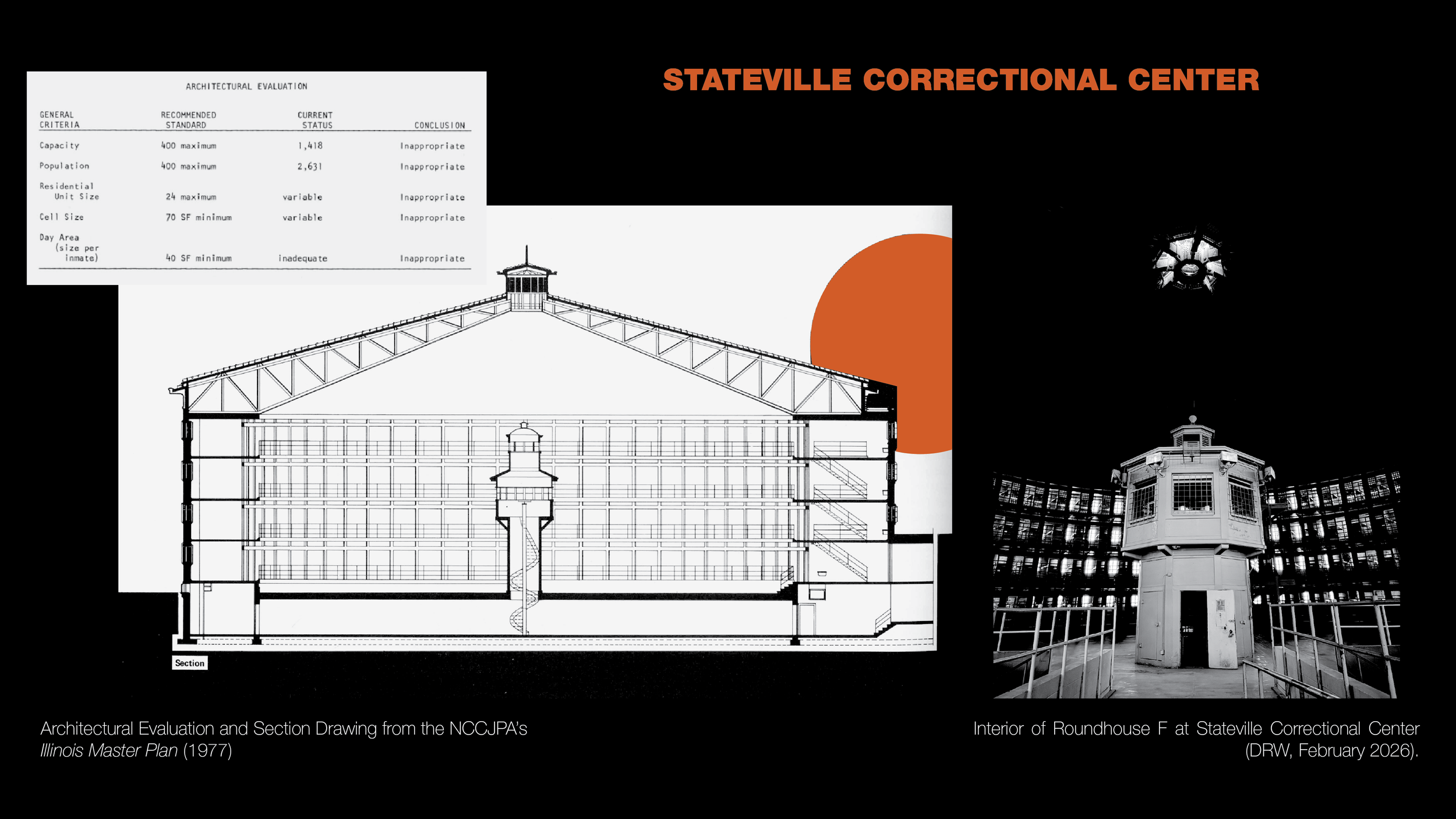
Utilizing leading University of Illinois scholarship from 20th century cybernetics, this research interrogates the Clearinghouse’s work as an effort to produce a designed feedback apparatus. The NCCJPA simultaneously defined the problems while offering the solutions within their Guidelines. Through on-site facility evaluations leading to the production of iterative regional and site specific plans, the NCCJPA functioned as an informational processor, leading a review of over 2,000 projects for LEAA in Part E of the Omnibus Crime Control Act. Their selection process for federal grants and state architectural recommendations became a form of systemic feedback that reinforced designs that aligned with their reformative approaches.
The Clearinghouse sought to reduce institutional fragmentation and inefficiency within the criminal justice system by strengthening links between all parts. Situating the NCCJPA within Avigail Sachs’ framework of postwar environmental design, this paper highlights the Clearinghouse as it transformed the architectural practice around the criminal justice system into a technocratic instrument of governance through government aided research within the university.