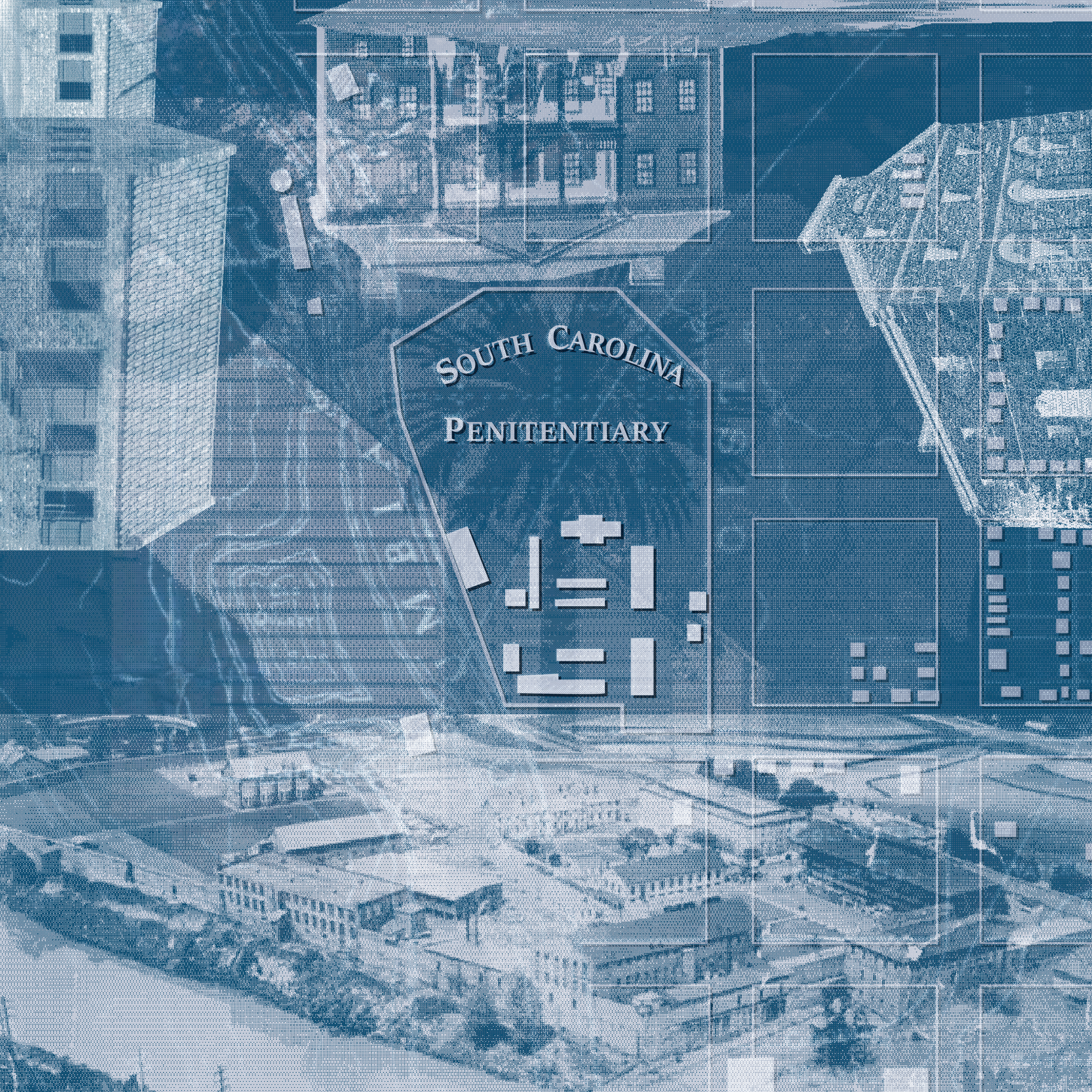
The Historic Centralization and Modern Visualization of the South Carolina Penitentiary
Abstract:
This paper examines the social, architectural, and landscape evolution of sites and places of power and domination in South Carolina during the 19th century that culminated with the inception of the state’s first penitentiary. In doing so, this research proposes that while the original design of the 1867 penitentiary resembled typical carceral systems of the time, what ended up being built was merely a physical representation of southern heritage ideals in the Reconstruction era South. The hospital and administration building, in direct contrast to the main cell blocks, provide a visual embodiment of a bifurcation of power, directly linking the design of this carceral environment to the socially and racially stratified jails, hospitals, and plantations that preceded it. Through a series of diagrammatic analyses mapping these physical manifestations of power, domination, surveillance, racial subjugation, and labor, this paper highlights the centralization process of South Carolina’s custodial arrangement of criminals through a chronological trace of plantation sites, local jails, and health care related facilities, all culminating toward the state’s erection of the South Carolina Penitentiary.
From the decentralization of vernacular slave quarters over seen through the surveillance of the enslaver’s Big House, South Carolina’s landscape was marked with a visual segregation of racial and social hierarchy. The quarters and forced labor were the physical embodiment of racial subjugation, and their spatial arrangement and materiality reflect the stratified society of the time. The penal system, having never fully developed institutionally like other states in this era, was also decentralized. This left local municipalities responsible for housing offenders in local jails, leaving economic responsibility to the constituents of the counties that could afford a jail. In contrast to the penal system, the hospital system in the state’s capital was quite robust. Not only was this system well-funded, in comparison to the penal system, but it was also architecturally ahead of its time in comparison to the surrounding southern sites of similar character.
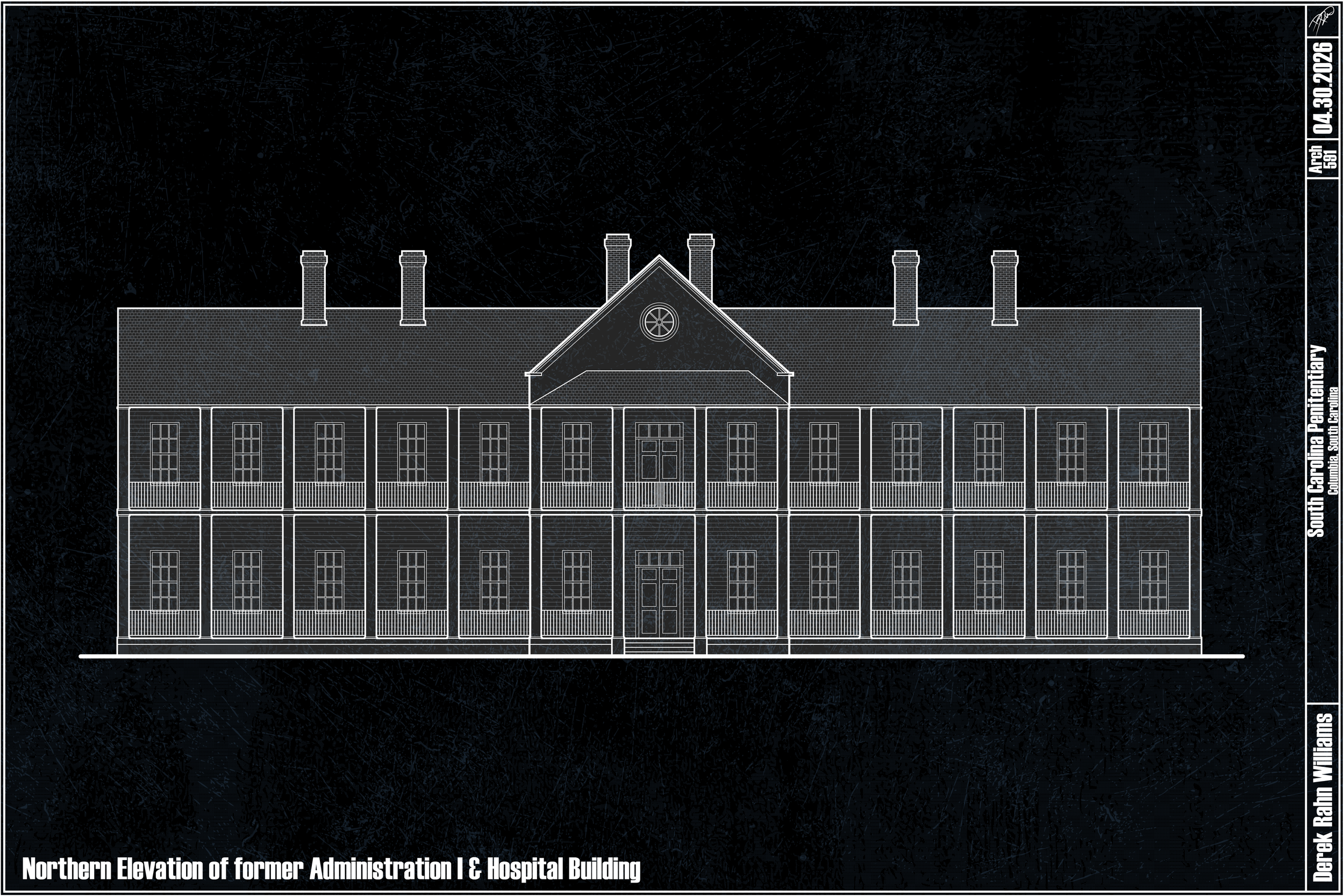
Following the Civil War, South Carolina opened the state’s first penitentiary in 1867, the first true centralized penal institution of the state. Multi-tier cell blocks, a hospital and administration building, and workshops built from brick and granite arose along the banks of the Congaree River in Columbia—not out of good will, but out of necessity through the erasure of slavery and the economic pressures of Reconstruction. This shift in South Carolina’s criminal justice system marked a moment of spatial consolidation through control, realized architecturally between brick walls of confinement. The Big House, now set within the space of confinement itself, created a new Master in the form of a warden, prison guards and even the building itself. The hospital and administration building, built on the northern vicinity of concentration in the penitentiary, on a slight hill within the grounds, mimetically reflected the state’s plantation roots through its placement against the cell blocks. Its façade, accompanied with a wraparound porch, directly mirrored the antebellum architecture dotted along the rural landscape.
Economically, this consolidation of state power was realized through the industrialization of carcerality with labor in construction, factories, and farming. Socially, this was backed by the heightened racial logic of confinement targeting newly freed Black Carolinians. But physically and architecturally, this was realized through the reproduction of a plantation-esque antebellum layout, drawing southern heritage ideals from previous generations.
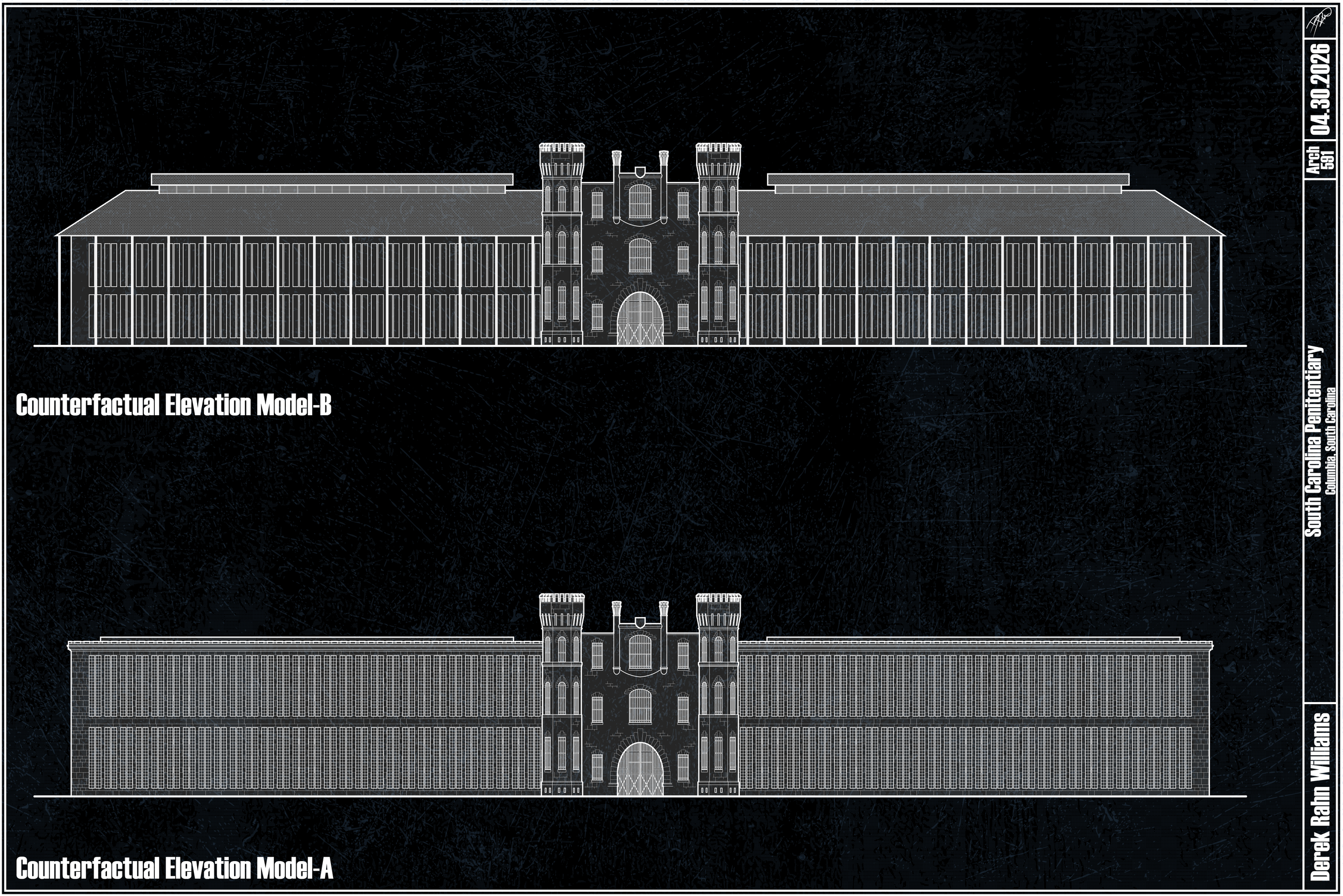
This paper highlights the architectural language used in South Carolina’s early institutional environments including antebellum plantations, local jails, and hospitals culminating in the state’s first penitentiary. Through historic illustrations, maps and photographs, as well as a series of extrapolated diagrams and drawings, this paper, and the accompanying visuals, illustrates the intertwined social forces of race, labor and power through their architectural and landscape embodiment. Not only does this paper offer a counterfactual approach toward understanding Thomas B. Lee’s original design of the penitentiary, but the critique offers new frameworks to reinterpret how we architecturally understand and view the complicated history in the standardization of carcerality, especially in the South. By comparatively illustrating prior institutional architectures, South Carolina Penitentiary’s architectural language can be linked to a bifurcated system of power that draws on the memory of these earlier forms of labor, health, and carcerality.
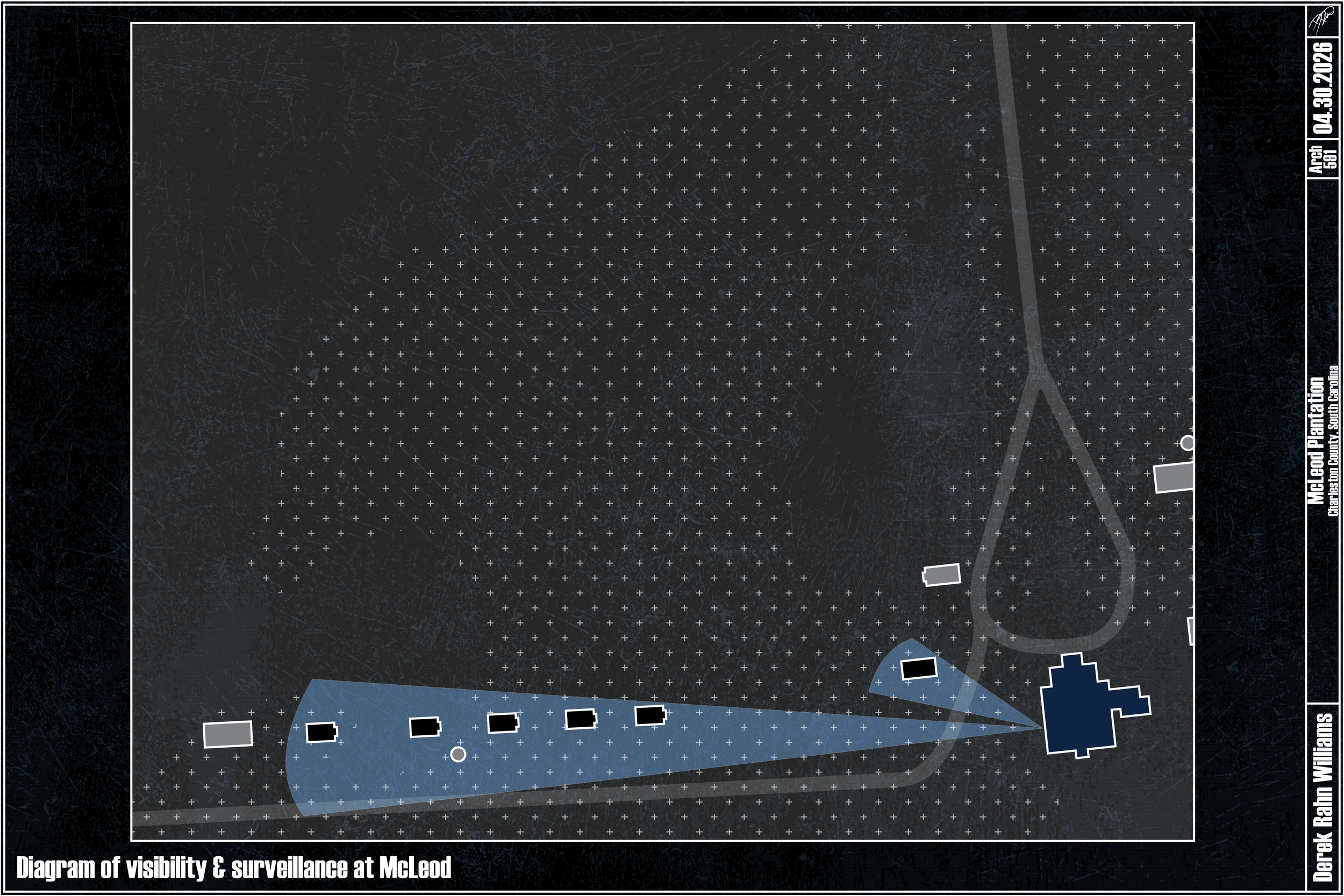
Visibility & Surveillance at McLeod Plantation (plan)
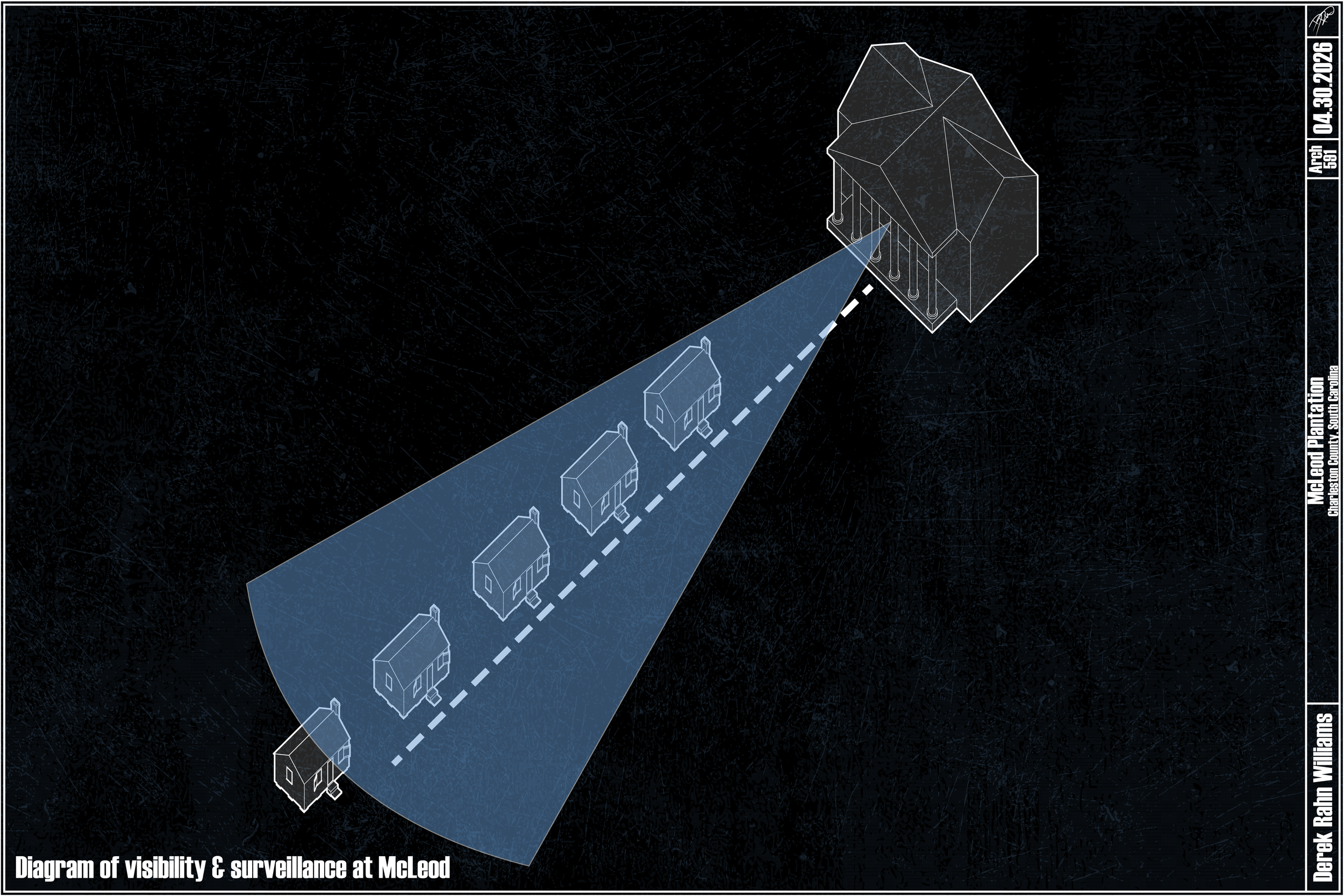
Visibility & Surveillance at McLeod Plantation (axo)
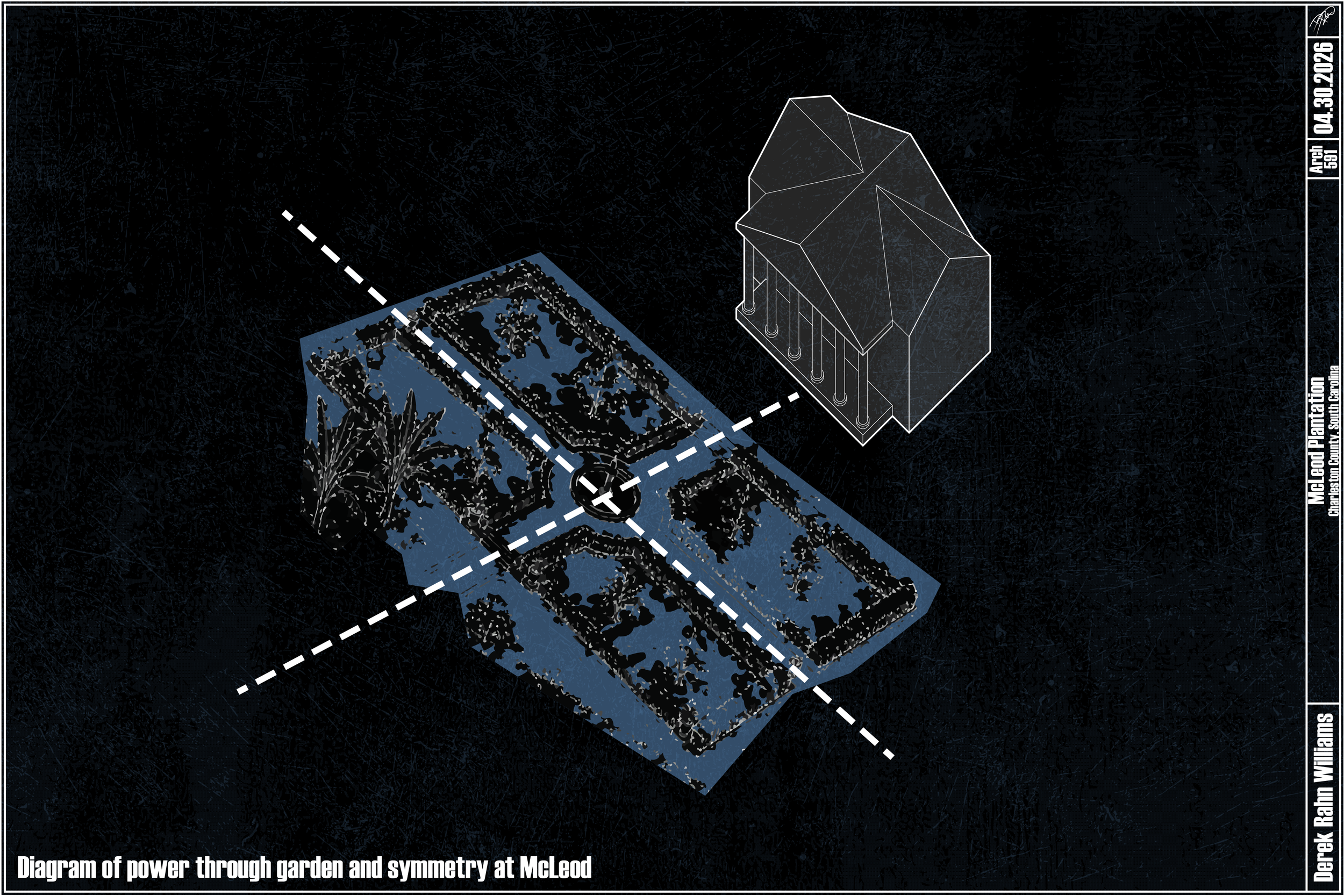
Power & Symmetry at McLeod Plantation (axo)
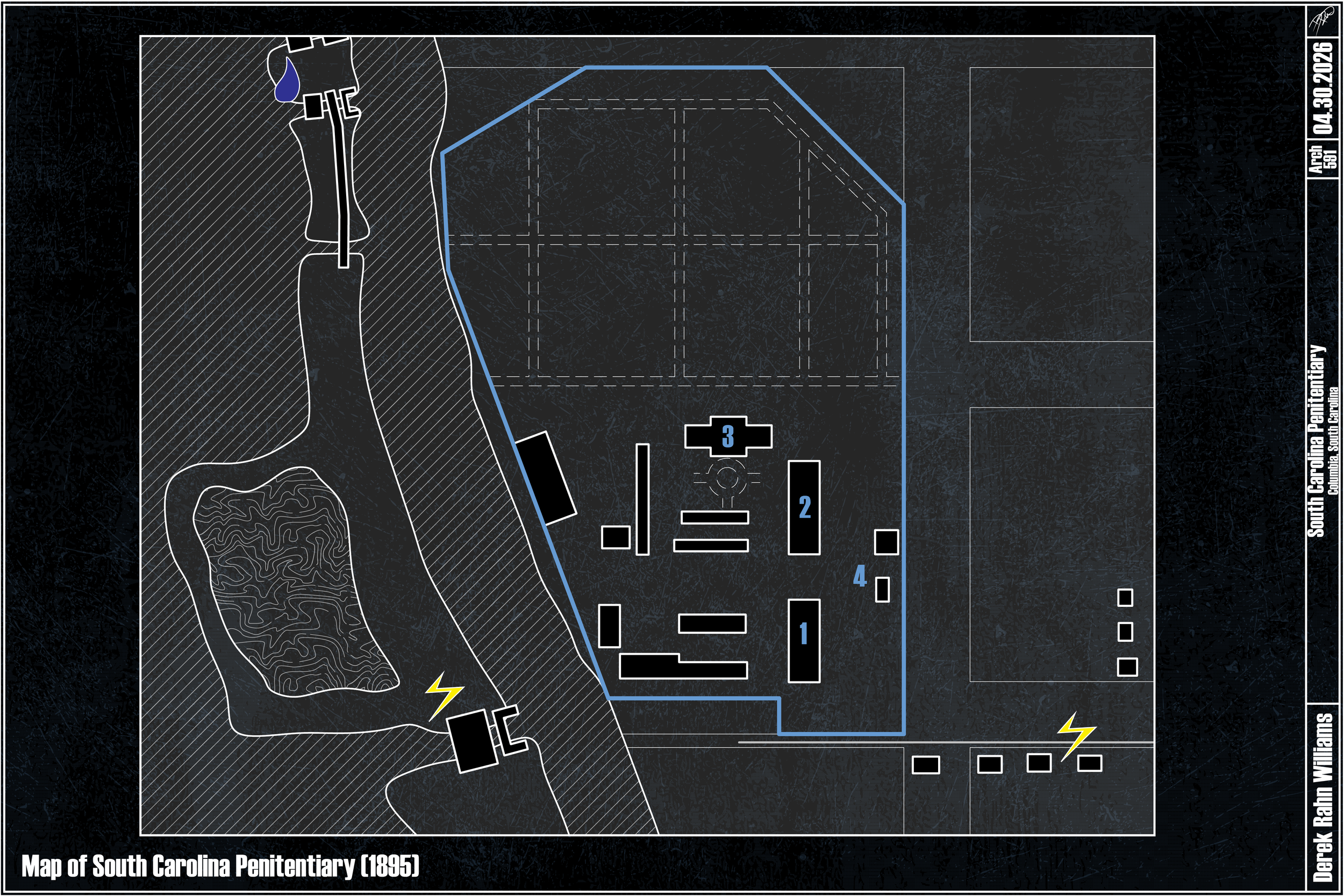
Consolidation power through resources in ~1880 plan of SCP
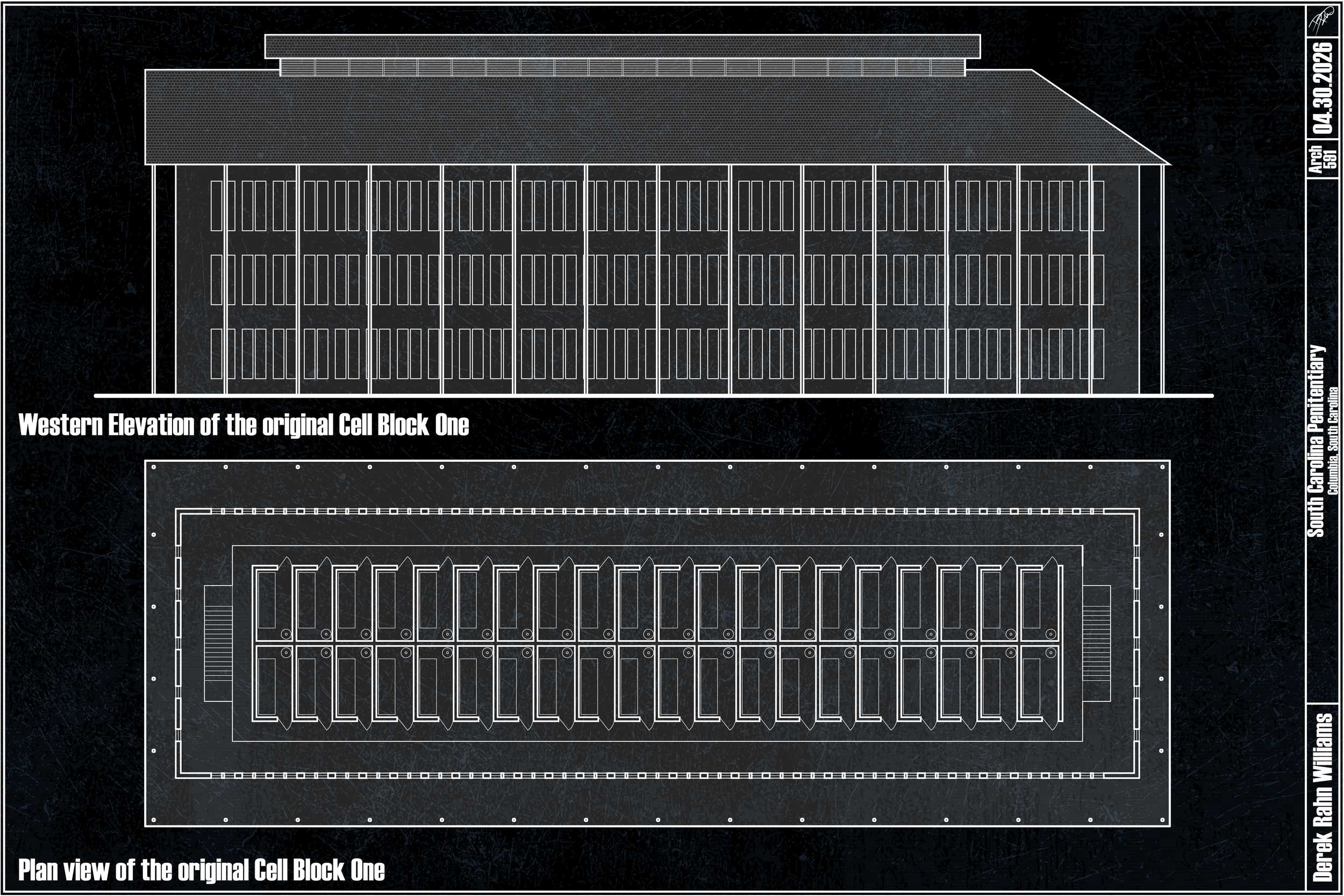
Original Cell Block Elevation & Plan at SCP
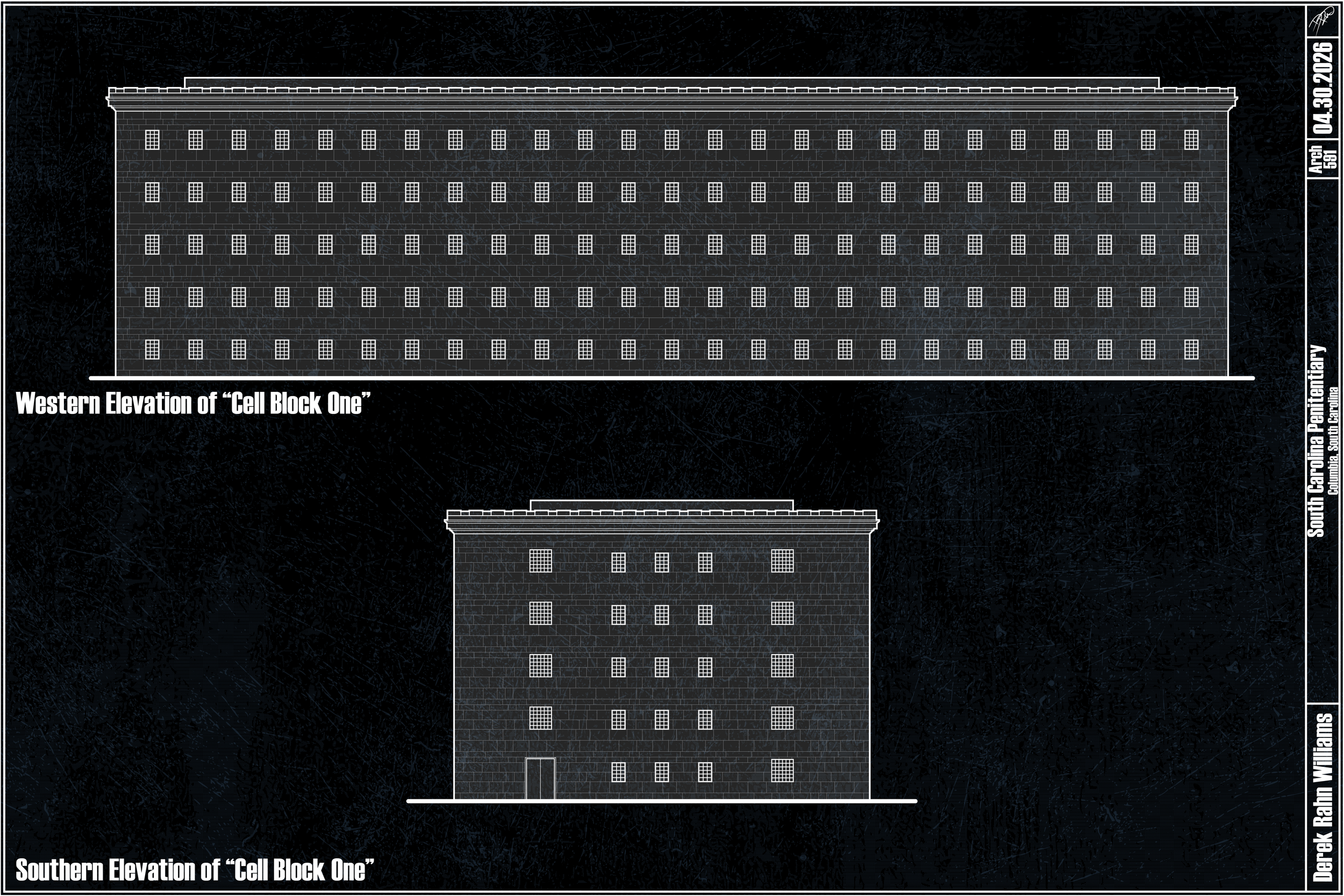
Second Cell Block Elevation(s) at SCP
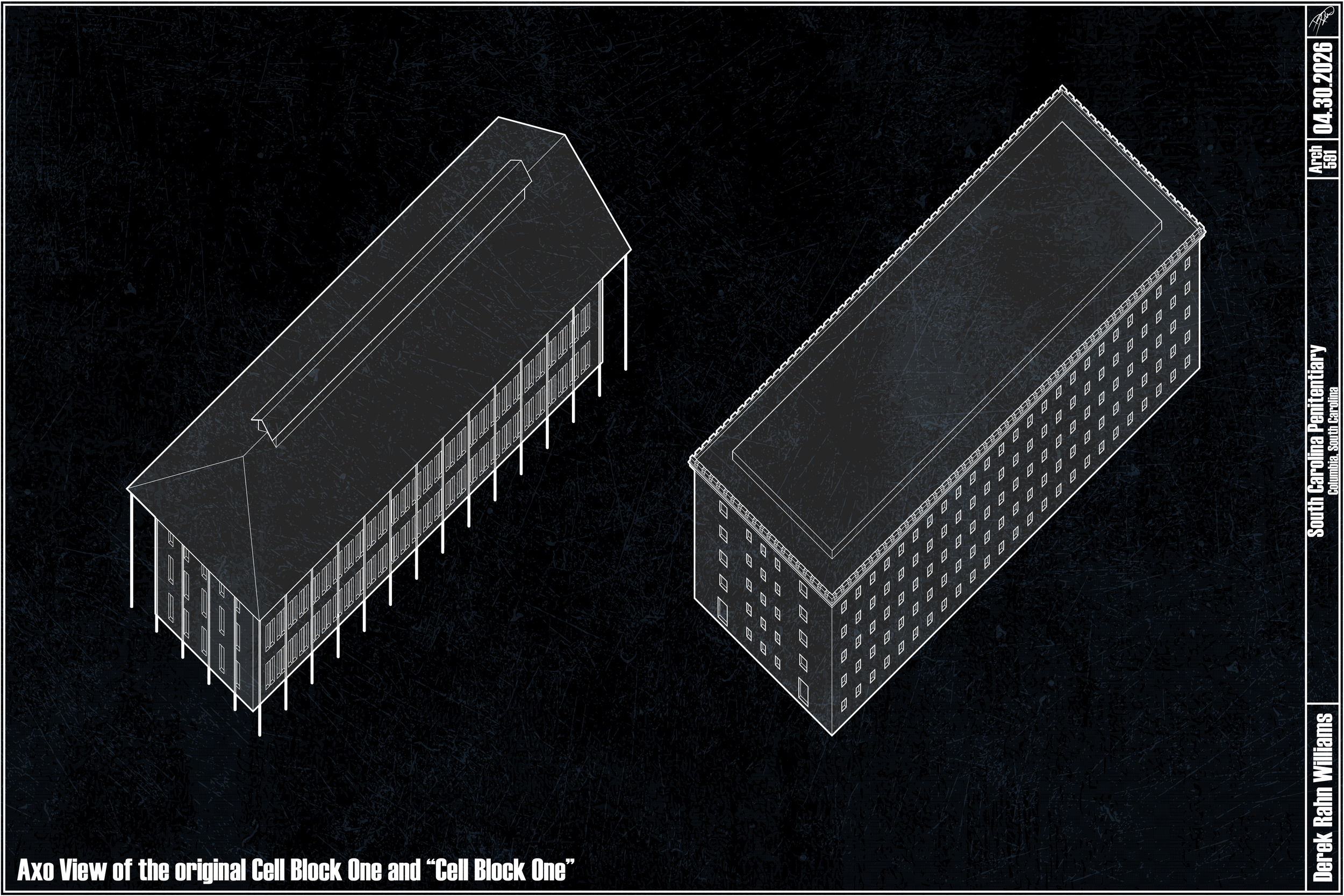
Cell Block comparison between the two cell blocks (axo) at SCP
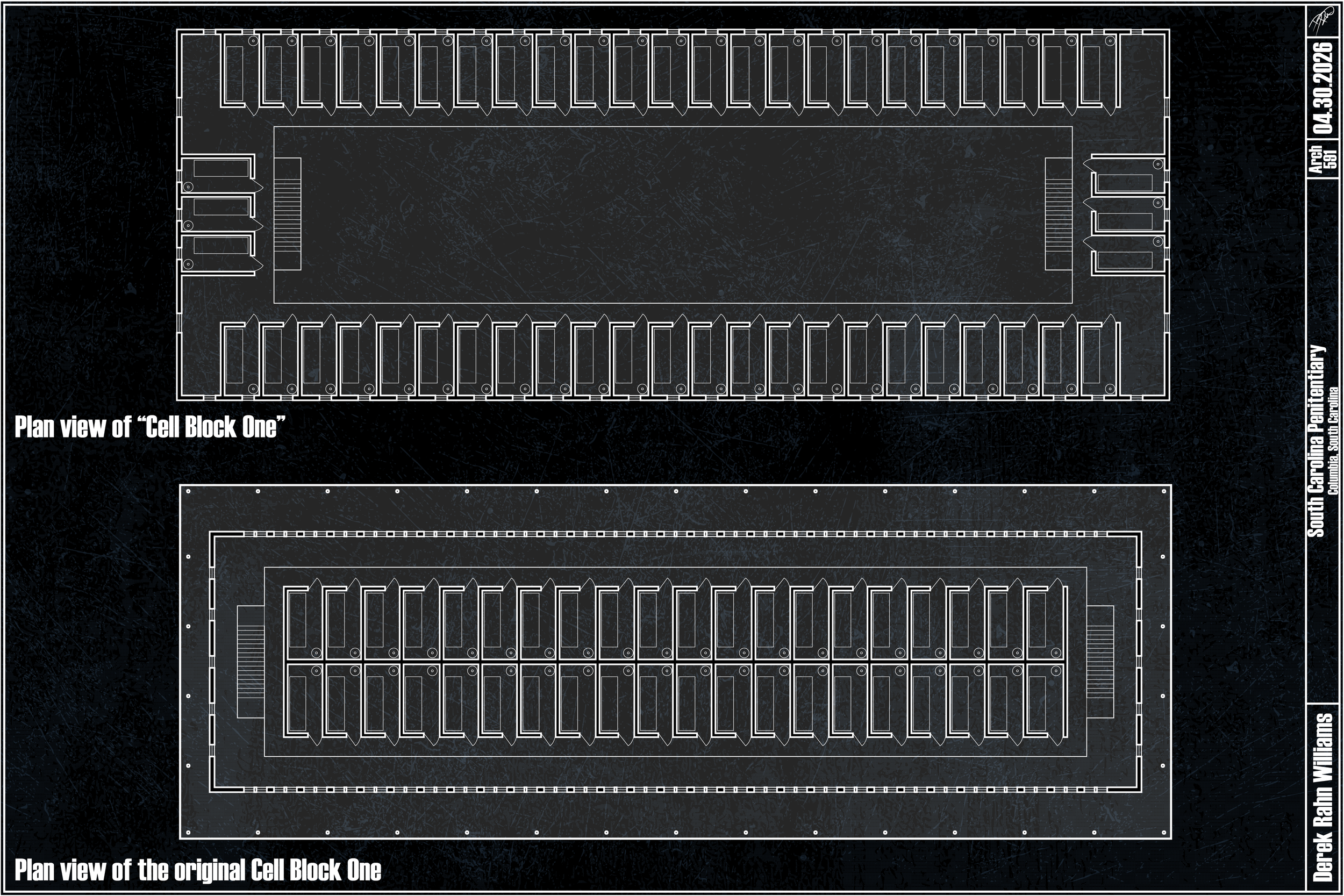
Cell Block comparison between the two cell blocks (plan) at SCP
Hospital/Admin I Building Elevation at SCP
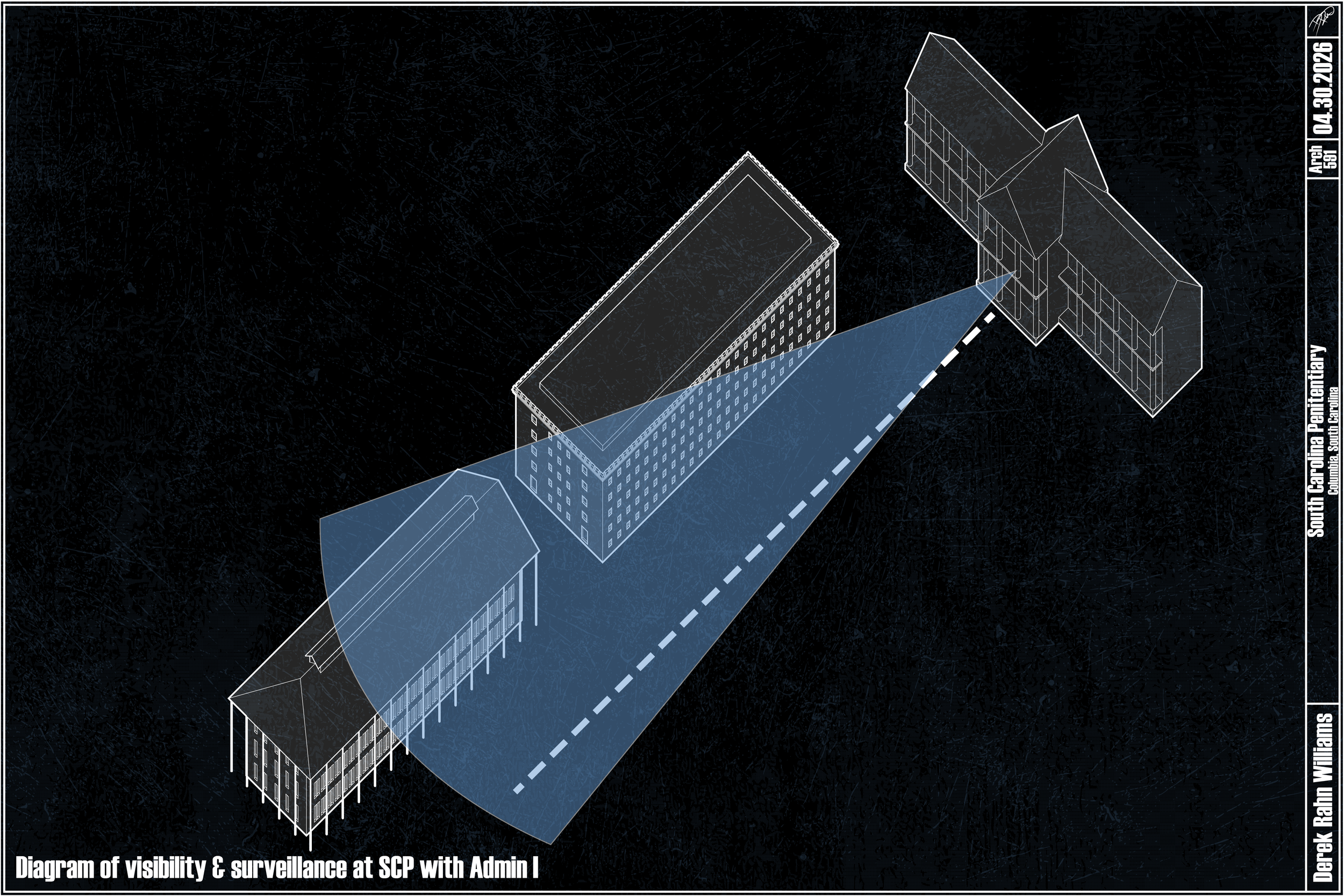
Visibility & Surveillance at SCP
Power Relations between Admin I & Cell Blocks at SCP
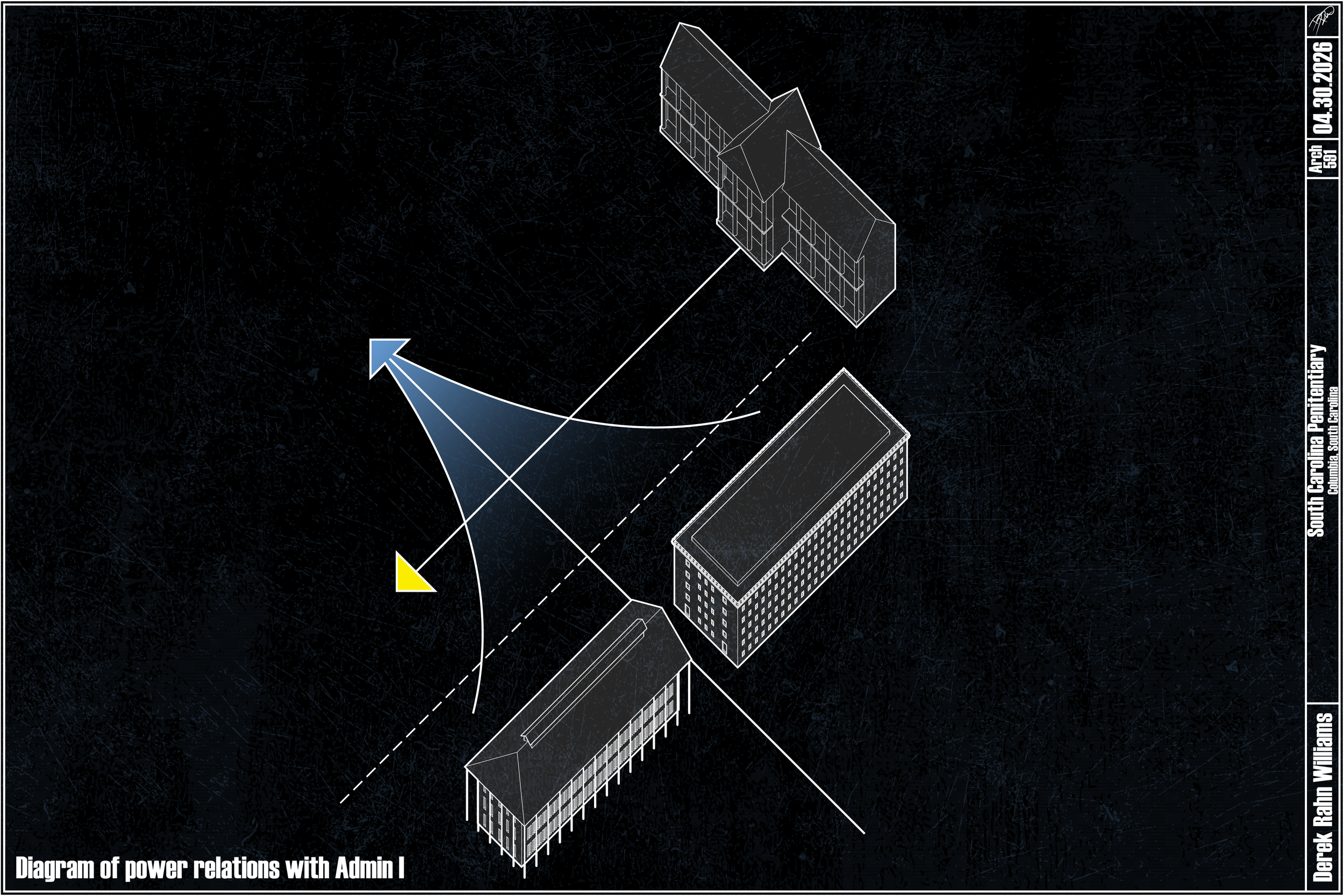
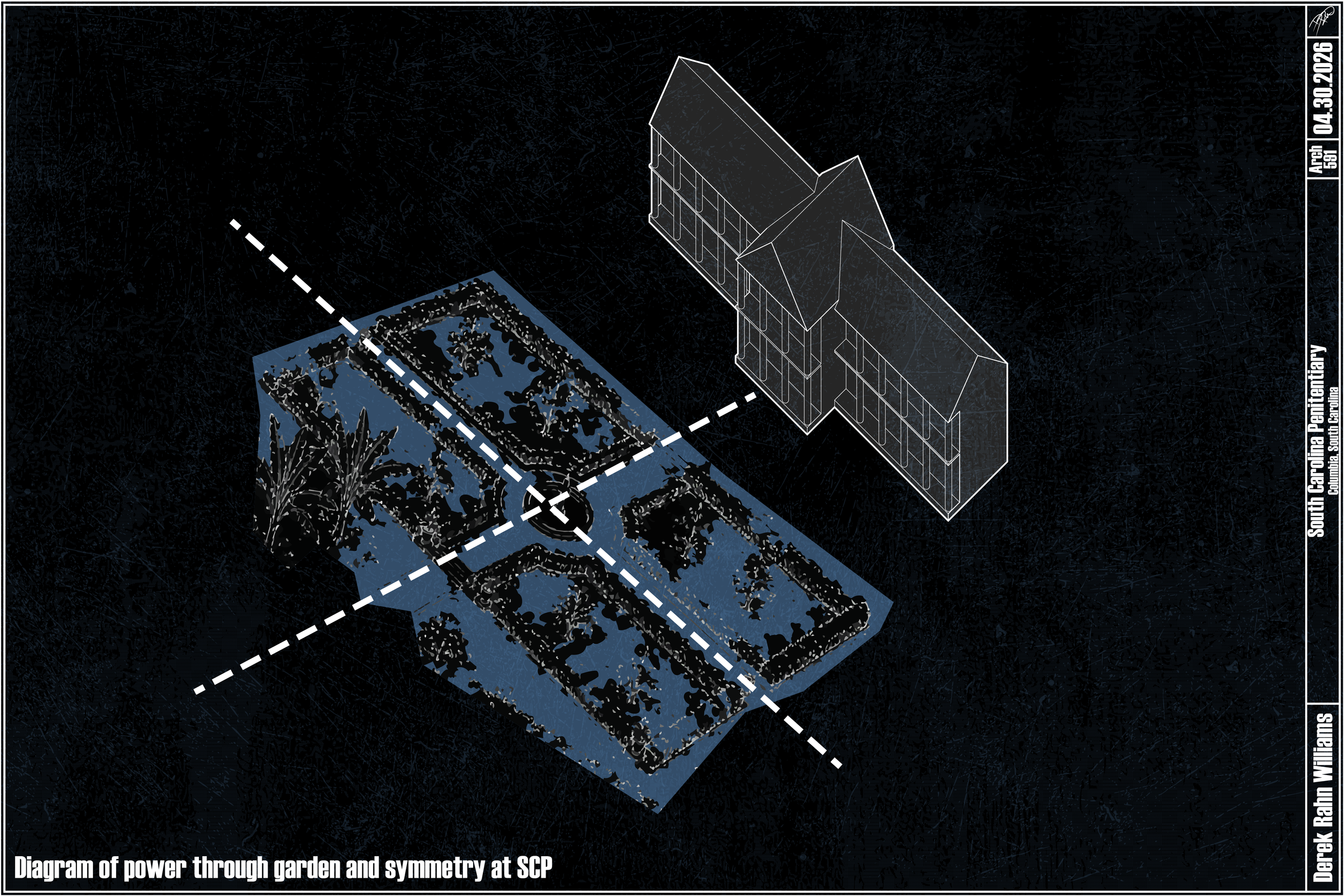
Power & Symmetry at SCP
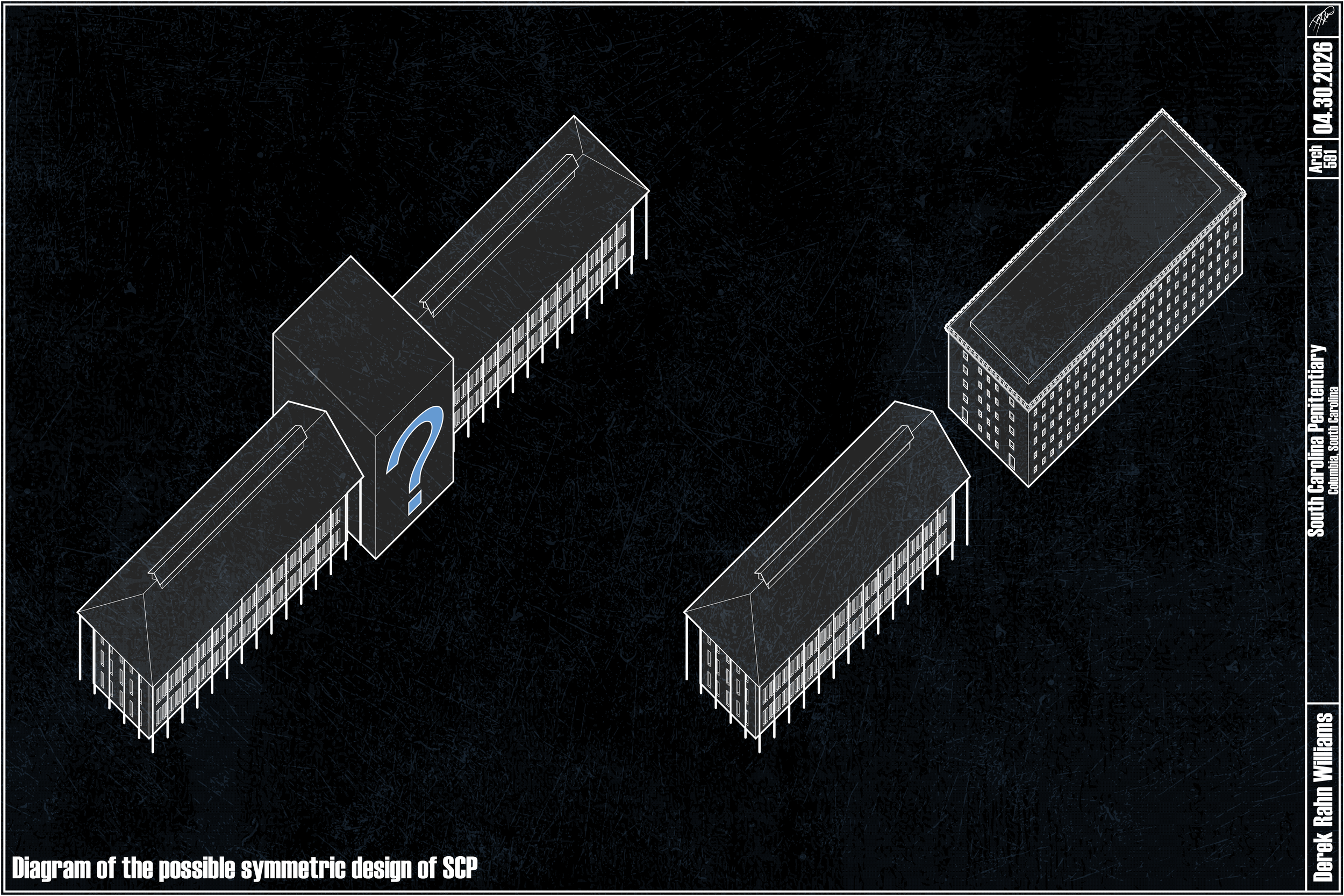
Counterfactual Modeling of SCP (axo)
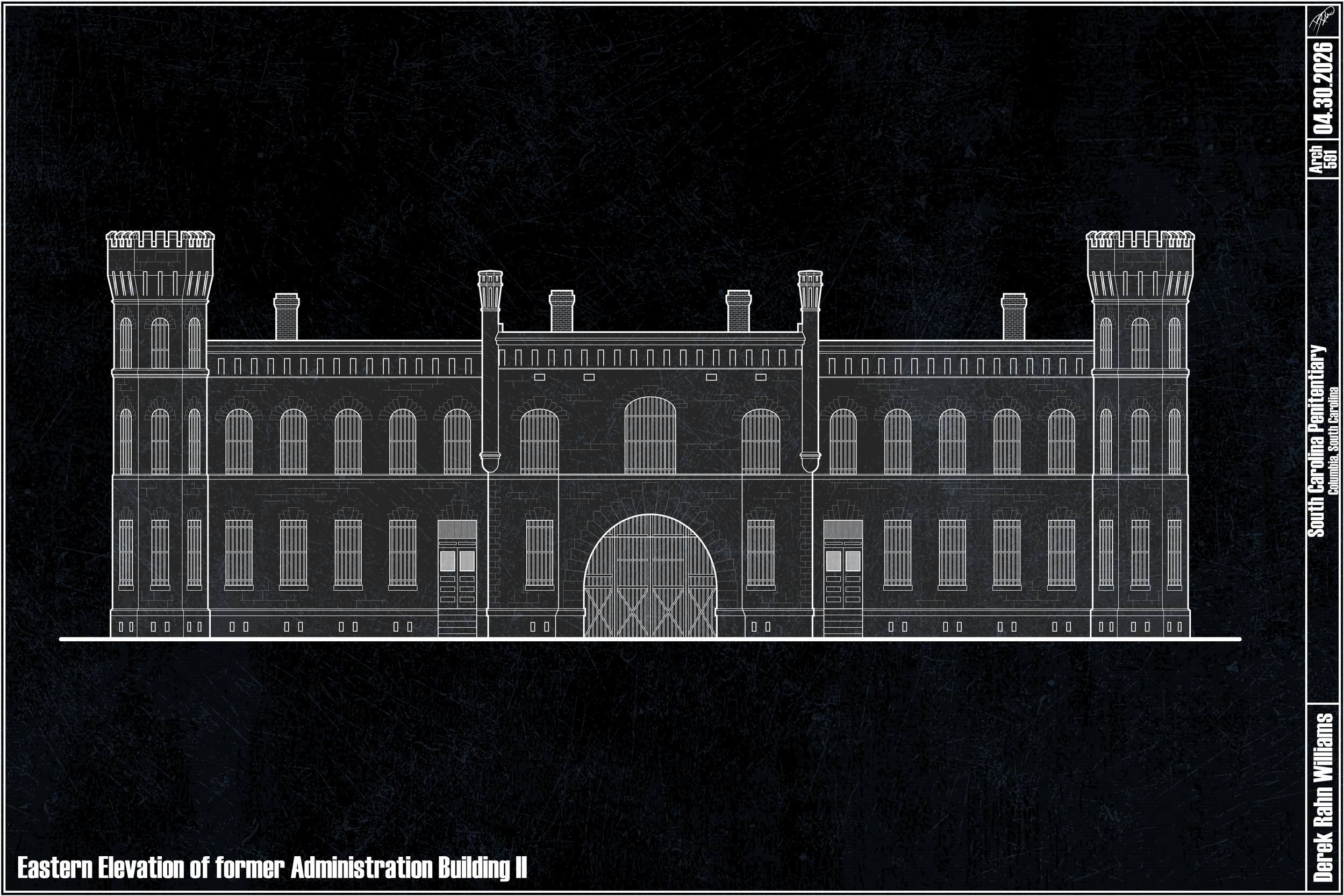
Administration Building II (elevation)
Counterfactual Modeling of SCP (elevations)
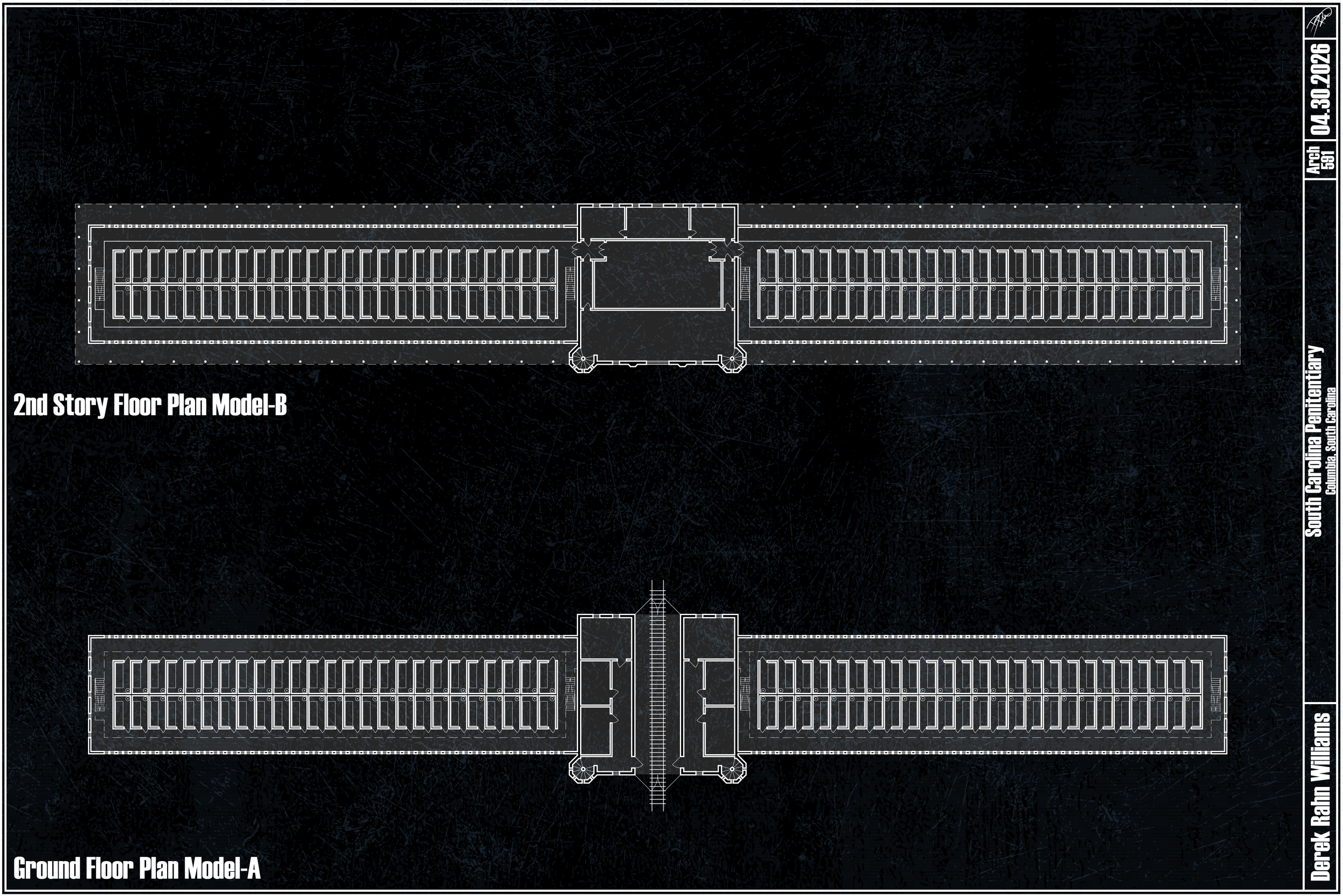
Counterfactual Modeling of SCP (plans)